
𝐓𝐡𝐞 𝐂𝐨𝐧𝐯𝐞𝐫𝐬𝐚𝐭𝐢𝐨𝐧, 𝐍𝐨𝐭 𝐭𝐡𝐞 𝐂𝐨𝐧𝐟𝐫𝐨𝐧𝐭𝐚𝐭𝐢𝐨𝐧: 𝐀 𝐁𝐞𝐭𝐭𝐞𝐫 𝐖𝐚𝐲 𝐰𝐢𝐭𝐡 𝐑𝐞𝐩𝐨𝐫𝐭 𝐂𝐚𝐫𝐝𝐬.

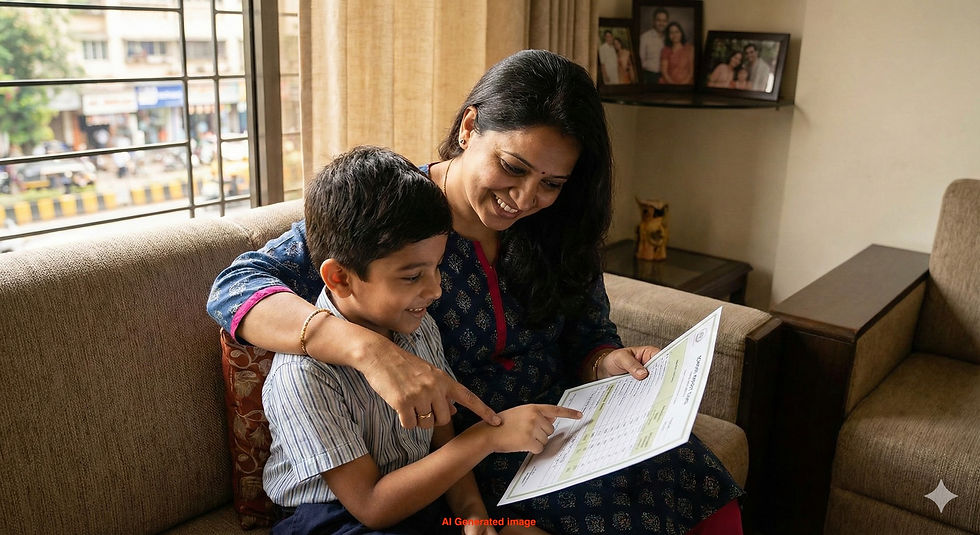
The report card arrives. It is a piece of paper, a collection of letters and numbers. Yet, in many homes, it becomes a trigger for an explosion. A parent scans the grades, their eyes locking on the low marks. Their stomach tightens. Disappointment rises, fast and hot, followed by a lecture, a berating, a slanging match. The child shrinks, defends, or explodes back. The paper is no longer a report; it is a verdict. On the child’s effort, and silently, on the parent’s worth.
In that moment, the parent has made a critical mistake. They have taken ownership of the news. They have made the grades their problem to solve with anger, rather than the child’s reality to understand with curiosity. The conversation becomes a confrontation about the unchangeable past, and everyone loses.
There is a better way. It begins with a simple, profound shift. Hand the report card back to your child. Look at them and say, “𝐄𝐱𝐩𝐥𝐚𝐢𝐧 𝐭𝐡𝐢𝐬 𝐭𝐨 𝐦𝐞.”
This is not an abdication of responsibility. It is the beginning of a real conversation. You are transferring the ownership of the narrative back to its rightful author: the student. You are asking them to be the expert on their own journey.
“𝑇𝑒𝑙𝑙 𝑚𝑒 𝑤ℎ𝑦 𝑦𝑜𝑢 𝑡ℎ𝑖𝑛𝑘 𝑚𝑎𝑡ℎ 𝑖𝑚𝑝𝑟𝑜𝑣𝑒𝑑 𝑡ℎ𝑖𝑠 𝑡𝑒𝑟𝑚.”
“𝑊ℎ𝑎𝑡 ℎ𝑎𝑝𝑝𝑒𝑛𝑒𝑑 𝑖𝑛 ℎ𝑖𝑠𝑡𝑜𝑟𝑦 𝑡ℎ𝑎𝑡 𝑚𝑎𝑑𝑒 𝑖𝑡 𝑠𝑜 𝑐ℎ𝑎𝑙𝑙𝑒𝑛𝑔𝑖𝑛𝑔?”
“𝑌𝑜𝑢 ℎ𝑒𝑙𝑑 𝑠𝑡𝑒𝑎𝑑𝑦 𝑖𝑛 𝑠𝑐𝑖𝑒𝑛𝑐𝑒, 𝑤ℎ𝑎𝑡 𝑑𝑖𝑑 𝑦𝑜𝑢 𝑑𝑜 𝑡𝑜 𝑚𝑎𝑖𝑛𝑡𝑎𝑖𝑛 𝑡ℎ𝑎𝑡?”
Suddenly, you are not a prosecutor with evidence. You are a detective partnered with the key witness. You are having a conversation, especially crucial with a teenager who is fighting for autonomy. The child must articulate their successes, analyse their struggles, and take ownership of their challenges. In doing so, they move from a passive recipient of judgment to an active participant in their education.
You will learn why they struggle. Is it a difficult teacher, a confusing concept, a lack of study habits, or something deeper? The discussion naturally pivots from the past to the future. The question changes from “𝐖𝐡𝐲 𝐝𝐢𝐝 𝐲𝐨𝐮 𝐟𝐚𝐢𝐥?” to “𝐖𝐡𝐚𝐭 𝐤𝐢𝐧𝐝 𝐨𝐟 𝐡𝐞𝐥𝐩 𝐝𝐨 𝐲𝐨𝐮 𝐧𝐞𝐞𝐝 𝐭𝐨 𝐢𝐦𝐩𝐫𝐨𝐯𝐞?”
This approach defuses the bomb. It replaces shame with problem-solving. It replaces a lecture with a dialogue. It stops you from seeing the report card as a reflection of your parenting. It allows you to see it for what it truly is: a snapshot of your child’s current understanding, a map that shows where the road got rocky, and the starting point for your next, collaborative journey forward. The goal is no longer to punish for the past grade, but to equip for the next challenge. That is a conversation where everyone can finally feel heard, and where real growth can begin.


Comments